
Robotics in China:
Execution Architecture

In brief
Robotics in China cannot be properly understood if observed solely through the lens of the final machine. Its true significance lies in the execution architecture that makes it possible: a dense network of materials, components, software, integration, manufacturing, and services capable of rapid recombination.
Rather than merely exporting isolated products, China is consolidating strategic industrial capabilities at scale, turning robotics into a system built for rapid deployment, integration, and reuse across sectors.
This is one of the keys to interpreting its technology and industrial ecosystems: not as innovation showcases, but as systems designed to convert knowledge into execution, scale, and influence.
For Europe, the relevance is clear. Competition in robotics is no longer limited to who builds the most striking machine. It increasingly depends on who can connect design, production, adaptation, and deployment with the least friction.
Introduction
While Europe often discusses robotics in terms of finished products, China increasingly appears to approach it as a systems problem that links components, integration, manufacturing, and deployment.
For me, that is one of the decisive differences.
What I have witnessed over the years in cities such as Hangzhou, in industrial environments, at company visits, at technology fairs, and in the daily integration of new technologies, consistently points in the same direction: robotics in China cannot be properly understood as a collection of finished products. It must be read as part of a much broader industrial, technological, and territorial ecosystem. An ecosystem designed to convert innovation into real execution capability.
In China, robotics begins upstream: with suppliers, components, software, integration capacity, and the ability to move quickly from design to deployment.
Robotics does not begin with the robot
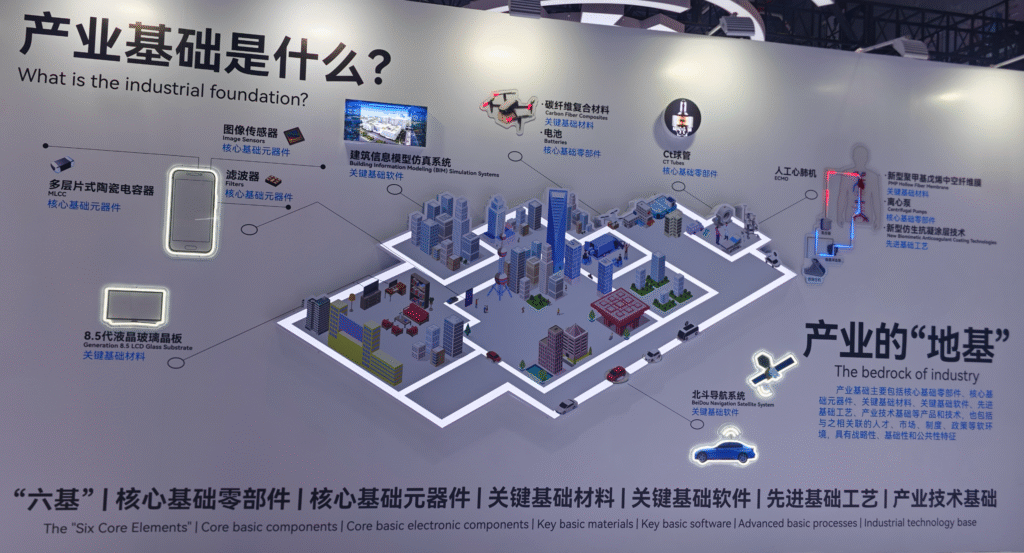
A robot is not born when a humanoid machine appears on stage, nor when we see a robotic arm functioning on an assembly line. In practice, robotics begins much earlier: in the sensors, in the actuators, in advanced materials, in control systems, in artificial vision, in precision machining, in molds, in 3D printing, in electronics, in software, in cloud infrastructure, and in the supplier networks that make rapid assembly possible. The visible machine is only the final layer.
One of the great lessons that robotics in China teaches us is this: the robot should not be read as an object, but as the provisional result of an architecture. Just as a city does not begin with its skyline but with its infrastructure, energy, logistics, and invisible networks, robotics does not begin with the final body of the machine, but with functional modules that can be recombined in very different contexts.
The same robotic arm can serve delicate industrial manipulation, automated retail, medical assistance, or advanced prosthetics. The same sensing and control logic can support factory inspection, autonomous mobility, emergency response, or operations in dangerous environments.
What matters is not only the device itself, but the ease with which a capability can be transferred from one use case to another.
What China does differently
This is where a fundamental idea enters, one that in my view is essential to understanding not only robotics, but China’s current technological development more broadly: execution architecture.
China’s advantage is not explained only by market size, cost structure, or state support; it also reflects supply-chain density, rapid iteration, and the ability to connect design to deployment. An essential part of its strength lies in how it structures, coordinates, and accumulates industrial capabilities. What I have described elsewhere as a modular and fractal logic can be understood here in simple terms: productive functions are often replicated at different scales, modules are reused across sectors, and the transition from design to testing, adaptation, and deployment appears to occur with less friction than in more fragmented systems.
In practical terms, China is not merely manufacturing robots. It has built an environment in which it is easier to design them, modify them, reduce their component costs, test them, adapt them to new uses, and deploy them at scale. And that completely changes the conversation.
Because in that type of environment, robotics ceases to be a niche. It becomes a cross-cutting capability. This matters because the winning competition is increasingly at the level of system integration, not just mechanical performance.
It is about solving
In many of the Chinese robotics ecosystems I have observed, the emphasis tends to be less on spectacle and more on solving concrete operational problems. The goal is not to start from the icon, but from need.
That is why, when one looks seriously at robotics in China, one finds a broad spectrum of capabilities, including robotic hands,industrial inspection systems, quadrupeds exoskeletons, and cloud-connected training platforms.
Seen as a whole, the message is clear: China is not building an exhibition industry; it is building strategic industrial capacity.
key idea
The strength of the system does not lie only in the final machine, but in the ease with which capability transfers from one domain to another.
Interconnection
Robotics in China is easier to understand when viewed alongside artificial intelligence, advanced manufacturing, sensing, cloud infrastructure, digital twins, and industrial connectivity. Here lies one of the keys to the Chinese model: treating each technology not as an isolated compartment, but as a piece of a larger system.
What today serves an assembly line can also be adapted to remote surgery, electrical inspection, precision agriculture, port logistics, and infrastructure maintenance.
Chinese robotics should interest Europe not only for what it manufactures, but for the speed and coherence with which it connects sectors.
What this ecosystem reveals
The most important lesson lies not only in the robots China manufactures, but in the type of environment it has built to make them possible.
When you observe this landscape with some perspective, you understand that robotics does not truly advance where merely more sophisticated machines appear. It advances where there exists an industrial base capable of combining materials, components, software, data, manufacturing, integration, and scale within the same operational logic. That is the important difference.
This is why discussing robotics in China is not solely about automation. It is about industrial coordination, iteration speed, proximity between complementary capabilities, and a way of understanding technology not as an isolated piece, but as a system. The visible robot is only the final expression of a much broader network.
And this has implications far beyond robotics: in defence, logistics, energy, medicine, agriculture, and critical infrastructure, the same execution architecture determines who can deploy solutions quickly and at scale.
Because when a country develops this type of architecture well, it does not merely acquire the capacity to manufacture machines. It acquires the capacity to transfer solutions between sectors, adapt them rapidly, and project them outward.
What Europe should reconsider
Perhaps one of the most useful lessons for Europe is this: for too long, we have often looked at technology through its most visible layer — the final product, the brand, the spectacular demonstration, the striking breakthrough. But real strength usually lies earlier and deeper: in specialised suppliers, in processes, in the quality of integration, in testing capacity, in the ease with which a solution can be adapted, and in the density of the ecosystem that sustains it.


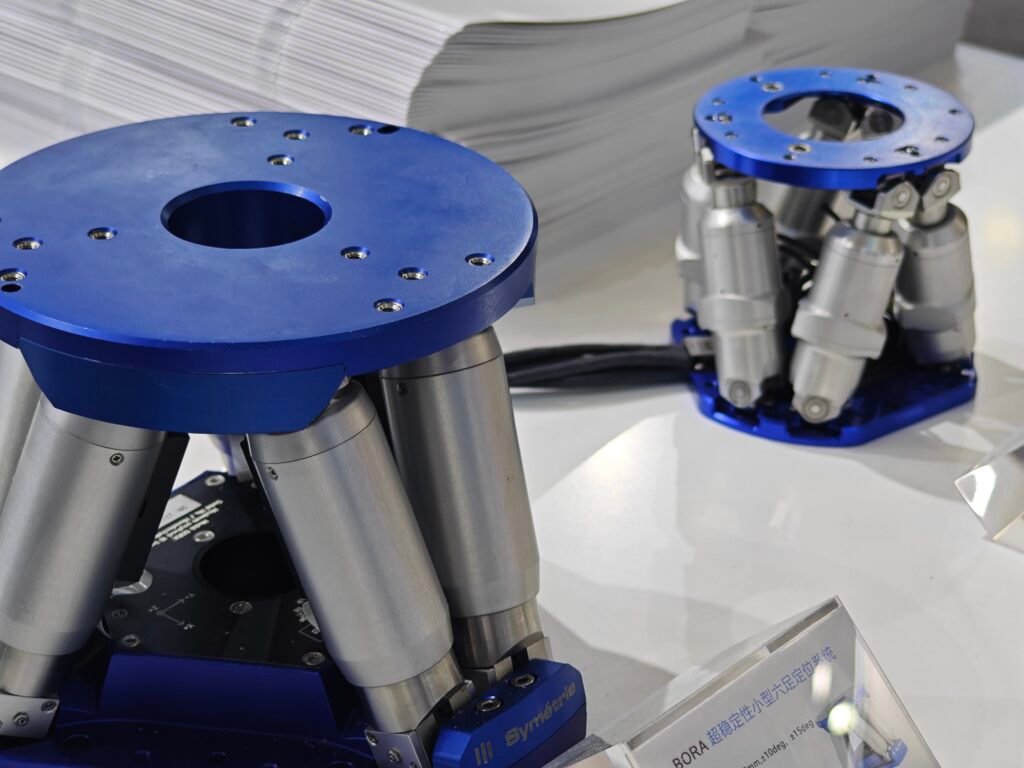
Chinese robotics forces us to look there. It reminds us that technological power does not depend only on who designs something new, but on who can recombine knowledge, manufacture efficiently, deploy at scale, and adapt rapidly to different contexts.
For Europe, the key question is not only production volume, but whether it can reduce the gap in deployment speed, integration depth, and supplier density that determines who scales first. The European Union still has a strong industrial robotics base, but the comparison with China increasingly turns on scale, speed, and ecosystem density rather than on engineering talent alone.
This is also why robotics should not be treated as a narrow industrial segment. It should be understood as part of a broader industrial-policy challenge: how to reduce the friction between research, manufacturing, integration, and territorial deployment. That is as much a European question as a technological one.
In China, at least in strategic sectors, the market helps drive innovation, but policy direction shapes where it goes. That helps explain why robotics evolves so quickly and pragmatically in this country—and why it is so difficult to interpret through Western frameworks.
One final idea
Looking at Chinese robotics only through the robot is equivalent to confusing the façade with the building. What is decisive is not only the isolated machine, but the execution architecture that articulates materials, software, manufacturing, integration, and learning within a single system.
That is why understanding China’s robotics ecosystem is a strategic necessity for Europe: the real competition is not only over robots, but over the industrial architecture that makes them usable, scalable, and adaptable.

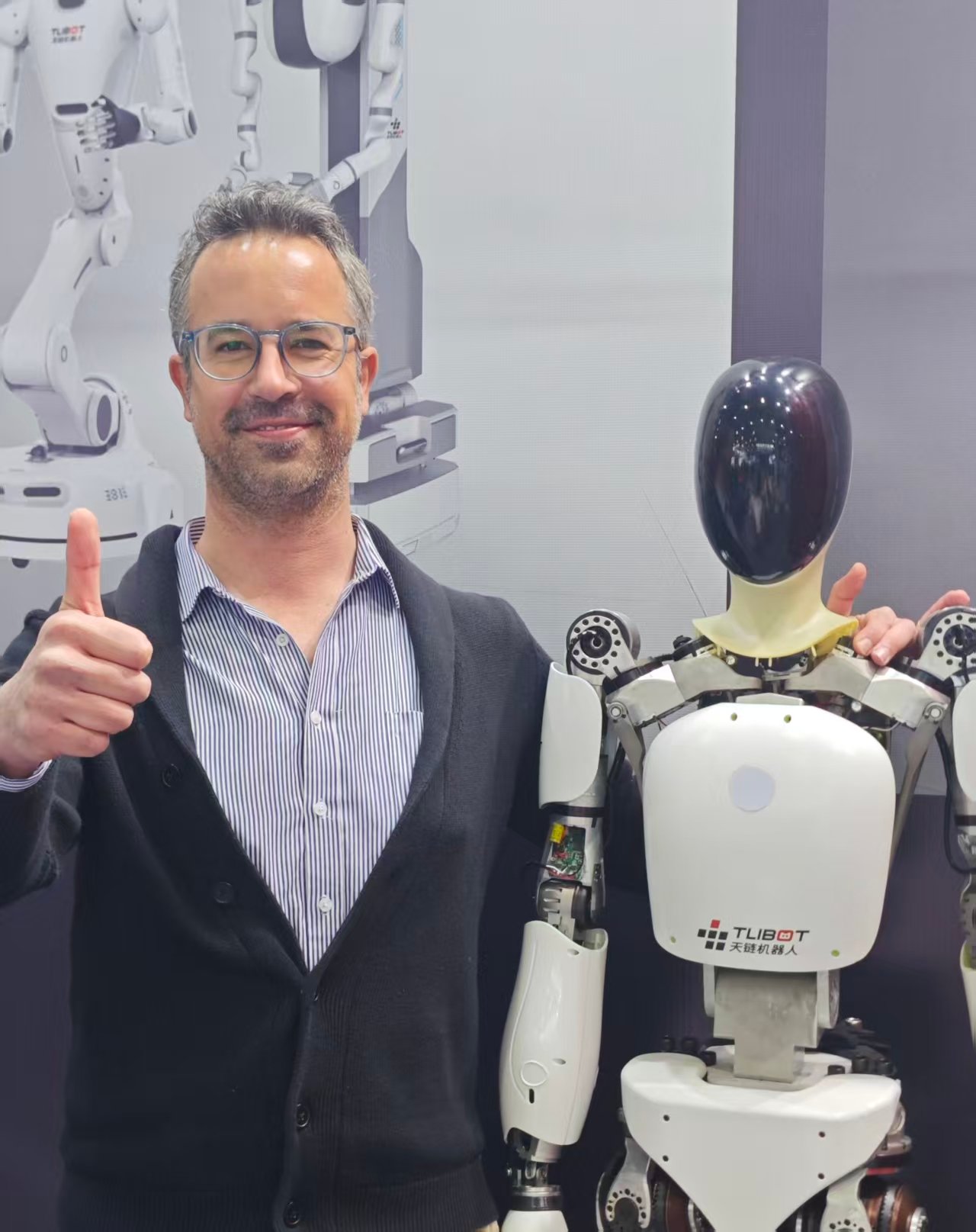
Gabriel Morell
Independent analyst of China's technology and industrial ecosystems for Europe.
Founder of Puentes de Seda.
Get in touch if you would like to explore what China’s robotics ecosystem may reveal for European industrial policy, technological sovereignty, and cross-sector capability building.